Sapphire vs. Mineral Crystal: Which Should You Buy?
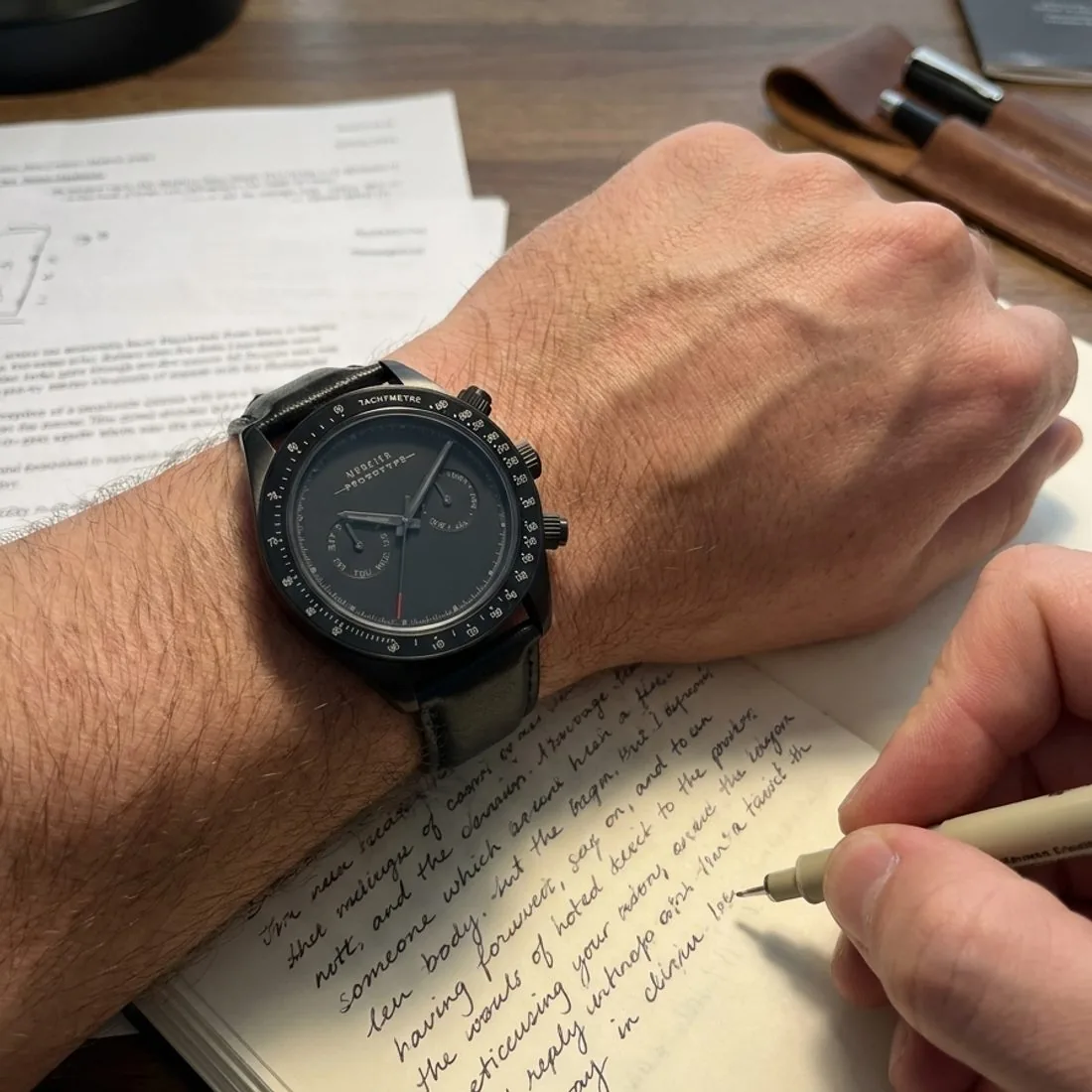
The crystal is the only part of a watch you look through every single time you check it, and it is the part most likely to get scratched. Here is what sapphire and mineral glass actually are, how to tell which one you are being sold, and why we put a domed anti-reflective sapphire on every Manx.
What the crystal is
The crystal is the transparent cover over the dial. It has two jobs: keep water and dust out of the case, and let you read the time without fighting scratches or glare. Spec sheets tend to spend one line on it. In daily use it is the difference between a watch that still looks new after three years and one that looks like it went through a gravel driveway.
There are three materials in common use. Acrylic, which is a plastic and scratches if you look at it wrong, though it can be polished back. Mineral glass, which is ordinary silica glass that has been heat-treated to toughen it. And sapphire, which is synthetic aluminum oxide grown in a lab and cut like a gemstone. The Manx uses sapphire, and we will explain why in a moment, but first the numbers that separate the three.
Hardness is the whole argument
Scratch resistance comes down to hardness, and hardness is measured on the Mohs scale, where 10 is diamond. Synthetic sapphire sits at 9. Mineral glass sits around 5 to 6. Acrylic is softer still. That gap is not a marketing rounding error. The practical rule is that a material can only be scratched by something harder than itself, and almost nothing you touch in a normal day, keys, coins, zippers, desk edges, door frames, sand, is harder than sapphire. Plenty of it is harder than mineral glass.
- Mineral glass picks up fine scratches and swirls within months of everyday wear. They cannot be polished out, so the fix is a replacement crystal.
- Sapphire stays clear for years. The realistic risk is a hard knock on a sharp edge, which can chip a crystal rather than scratch it, and that risk exists for every material.
- Acrylic scratches constantly but is cheap and can be buffed. It belongs on vintage pieces and budget field watches, not on a watch you plan to keep.
This is why the Manx has sapphire and not mineral glass. A watch we are asking you to wear every day for a decade, backed by a 5-year warranty, should not need its crystal replaced because it brushed a belt buckle.
The catch: sapphire reflects
Sapphire has one genuine downside. It has a higher refractive index than mineral glass, which is a physics way of saying it bounces more light back at you. Uncoated sapphire under a bright sky can turn into a small mirror, and you end up tilting your wrist to find the angle where the dial reappears. Some buyers try sapphire once, hate the glare, and blame the material.
The fix is an anti-reflective coating, a thin film applied to the crystal that cancels a large share of those reflections. Every Manx crystal is anti-reflective coated. On the Noir, with its blacked-out ceramic dial, that coating is what lets the dial read as a deep, flat black instead of a sheet of reflected ceiling lights. On the Blanc it keeps the white dial white rather than washing it out. It is a small line on the spec sheet that changes the watch every hour you wear it.
"You never think about a good crystal. That is the point of paying for one."
Domed or flat
The last variable is shape. A flat crystal is the cheapest to make, cut from a large sheet, and it is optically neutral: what you see is exactly what is on the dial. A domed crystal is machined or ground into a curve. It costs more, it takes longer to make, and it does three things a flat crystal cannot.
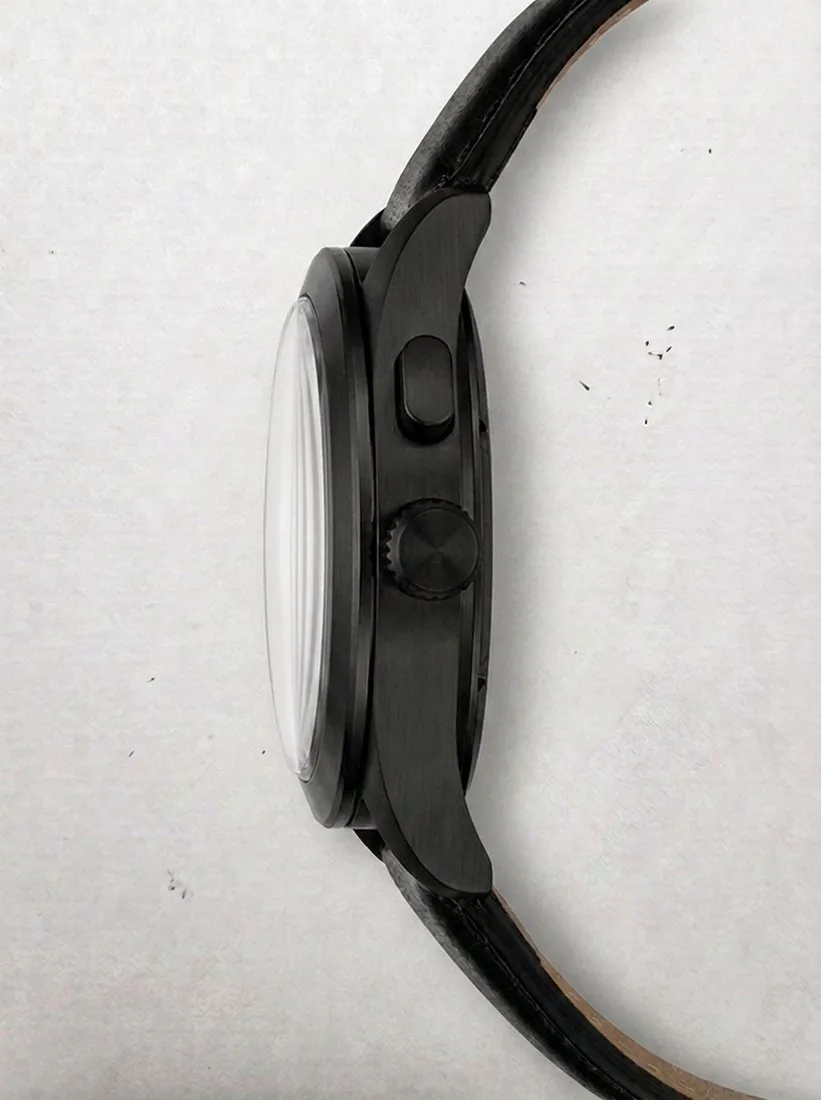
First, it gives the watch a profile. Look at the Manx from the side and the sapphire rises gently out of the black PVD bezel instead of sitting flush like a phone screen. Second, the curve bends light so the dial seems to sit slightly deeper in the case, which is where the ceramic dial and the Swiss Super-LumiNova markers get their sense of depth. Third, a dome sheds light differently at the edges, so paired with the anti-reflective coating you get fewer of the hard, straight-line reflections a flat crystal throws.
Domed sapphire with anti-reflective coating is the most expensive of the common combinations. Domed mineral glass is a compromise that scratches. Flat, uncoated sapphire is still common at many price points because it is the cheapest sapphire to make. We chose the expensive version for the Manx because the crystal is the one component you will interact with every time you look at the watch, and we were not willing to save money on it.
How to check what you are buying
A few habits for reading a spec sheet or a product page, whatever watch you are considering:
- Look for the word "sapphire" by itself. Phrases like "sapphire-coated" or "hardened mineral" mean mineral glass with a thin treatment. It is not the same thing and it does not wear the same.
- Check for anti-reflective coating. If the listing says sapphire and nothing else, assume it is uncoated and plan to live with the glare.
- Ask whether it is domed. Product photos shot straight on hide this. A side-profile photo tells you immediately.
- Read the water resistance rating alongside it. The crystal is part of the seal. Ours is rated to 10 ATM, which covers swimming and snorkeling, and the crystal gasket is part of how that rating is earned. We wrote a separate guide on what 10 ATM actually means.
If you are choosing between two watches at a similar price and one has domed anti-reflective sapphire while the other has flat mineral glass, the crystal alone tells you where the money went.
Why the Manx
The Manx has a domed sapphire crystal with an anti-reflective coating, sitting over a ceramic dial, in a 42 mm 316L steel case finished in polished black PVD and rated to 10 ATM. The movement behind it is a Miyota 9122 automatic. All of that is $795, with free U.S. shipping, a 5-year warranty and a serial number on the caseback from a run of 200 per dial. The bracelet is included with the first 200 orders, and if you would rather hold a spot than pay in full, a $200 deposit reserves your number and is fully refundable until the watch ships.
We are an independent, veteran-owned company and we built this watch to be worn, not stored. The crystal is where that shows first, every time you look down. See the Manx Noir and Blanc, or read our guide to buying your first automatic if you are still deciding what belongs on your wrist.
Domed sapphire, coated, standard.
Miyota 9122 automatic, ceramic dial, domed anti-reflective sapphire, 10 ATM. $795, or reserve your serial number with a $200 fully refundable deposit.
See the collection →