How to Buy Your First Automatic Watch (Without Overpaying)
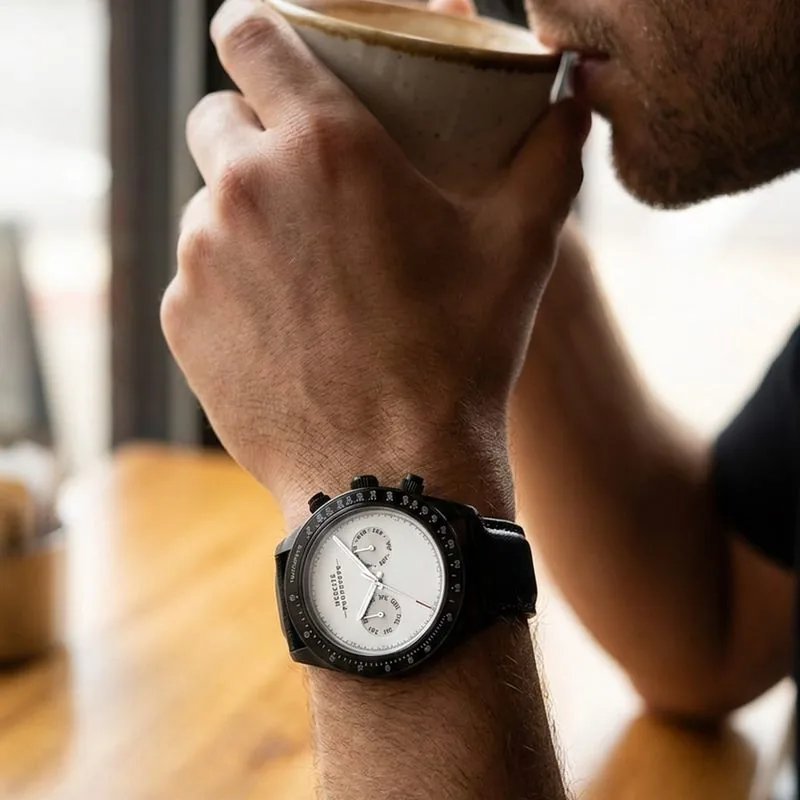
There has never been a better time to buy a mechanical watch, or an easier time to overpay for the wrong one.
The market is flooded. Heritage names, hype microbrands, fashion labels slapping a logo on a generic movement. For a first-time buyer, the noise is the hard part. So here's the honest version: a great first automatic watch is mostly about a few specifications, one good movement, and a case that actually fits your wrist. Get those right and you can spend a fraction of what the marketing wants you to, and end up with something you'll wear for decades.
First, what "automatic" actually means
An automatic watch is a mechanical watch that winds itself. Inside is a tiny weighted rotor that spins as your wrist moves, winding the mainspring and storing energy. No battery. When you take it off at night, it keeps running on its power reserve, typically around 40 hours, before it needs motion again.
That's the romance of it: nothing about an automatic is disposable. A quartz watch is powered by a battery and a circuit; it's more accurate to the second and cheaper to make, but it's a closed appliance. An automatic is a small machine you can feel ticking, service, and pass down. You're not buying timekeeping, your phone does that. You're buying the machine.
The movement is the engine
The single most important thing inside the watch is the movement, and here's the part the industry doesn't advertise: you do not need a rare or in-house movement to get a reliable one. A handful of workhorse calibers run the entire accessible end of the hobby, and they're trusted precisely because they're everywhere.
- Miyota (Japan), Citizen-owned, brutally dependable, used across thousands of microbrands.
- Seiko / NH-series, the movements behind countless beginner favorites; cheap to service anywhere.
- Sellita (Switzerland), Swiss-made, the go-to alternative to ETA, a step up in finishing and feel.
A watch built on one of these and finished well will outperform a "mystery movement" watch that costs twice as much. Prestige on the dial is not the same as reliability under it.
The specs that actually matter
Ignore most of the spec sheet. These four are the ones you'll feel every day:
1. Sapphire crystal
The glass over the dial. Sapphire is second only to diamond in hardness, it resists the desk-and-doorframe scratches that wreck cheaper "mineral" or acrylic crystals. If a watch has it, that's a real sign the maker cared about longevity. If it doesn't, keep looking.
2. Water resistance, and what "ATM" means
Water resistance is rated in ATM (atmospheres) or meters, and the numbers are conservative. As a real-world rule: 5 ATM survives splashes and hand-washing; 10 ATM is comfortable for swimming and snorkeling; serious diving needs 20 ATM and a screw-down crown. For a daily watch you never want to baby, 10 ATM is the sweet spot.
3. Case size, and the spec nobody mentions
Everyone checks case diameter (say, 40-42mm). Almost no one checks lug-to-lug, the distance across the case from one strap end to the other. That number decides whether the watch sits cleanly on your wrist or hangs off the edges. A 42mm watch with short lugs can wear smaller and more comfortably than a 40mm watch with long ones. Measure your wrist; look for the lug-to-lug.
4. Legibility
A watch you can't read at a glance is jewelry, not a tool. High contrast between the hands and the dial, applied markers, a little lume, these are the difference between glancing and squinting. It's also why the panda dial has survived sixty years.
"Spend on the crystal, the movement, and the fit. Everything else is taste, and taste shouldn't cost a premium."
Where the money should, and shouldn't, go
Here's the uncomfortable truth about a lot of watch pricing: a large share of it is brand tax and middlemen, not engineering. The same sapphire-and-Miyota build can wear a $200 price tag or a $1,200 one depending on who's selling it.
Spend on the things that touch your daily experience, crystal, movement, fit, water resistance, finishing. Don't pay extra for a "limited edition" that isn't actually limited, a complication you'll never use, or a name you're buying for the logo. The goal is a watch that earns its keep on your wrist, not in a safe.
How long will it last?
Properly cared for, a quality automatic can run for decades, many of these movements are accurate for 20-30 years before they need a service, and a service brings them back to life rather than ending them. That's the whole point. A good first automatic isn't a purchase you repeat every few years; it's one you wear in.
The short version
- Buy a proven movement (Miyota, Seiko/NH, Sellita) over a prestigious-sounding mystery one.
- Insist on a sapphire crystal and at least 10 ATM if you want a watch you never have to think about.
- Check the lug-to-lug, not just the diameter, and try it against your wrist.
- Pay for engineering and fit, not for a logo or a fake "limited" tag.
Meet Manx.
An automatic movement, domed sapphire crystal, 10 ATM, individually numbered, accessible luxury, built to be worn, not put away.
See Manx →