What Is a Living Prototype Watch?
Quick Summary
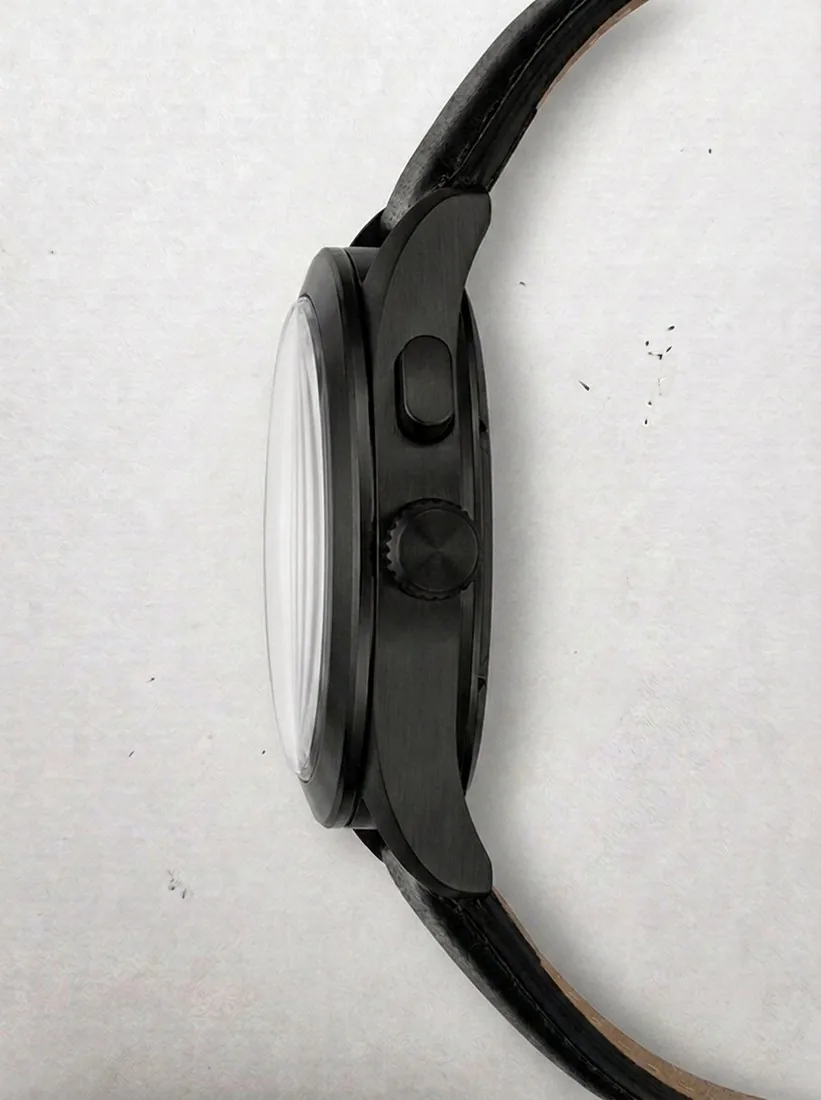
A living prototype watch is a working, wearable timepiece that a maker sells as a finished product while still refining its design based on owner feedback. Mercier Prototype builds every watch this way, with each piece running on a real automatic movement and carrying a 10 ATM water resistance rating.
- Each watch runs on a real automatic movement and has 10 ATM water resistance.
- Every piece is individually serial-numbered on the caseback.
- Owner feedback shapes what Mercier improves on the next run.
- The Manx line is limited to 200 watches across all four models.
- Each Manx watch is priced at $795.00 with a 5-year warranty.
Defining the Living Prototype Watch
A living prototype watch is a working timepiece that a maker sells as a real, wearable product while still treating it as a design in progress. At Mercier Prototype, every watch we build works this way.
The phrase sounds like a contradiction. A prototype is usually a test piece nobody sells. A living prototype is different: it runs, keeps time, and survives daily wear, but its design remains open to revision.
Our approach comes down to three things:
- It works now. Each watch runs on a real automatic movement and carries a 10 ATM water resistance rating.
- It is individually numbered. Every piece is serial-numbered on the caseback, so you know exactly which one you own.
- It can change. Feedback from owners shapes what we improve on the next run.
Many buyers assume a watch from a small shop is a rough draft. We see it differently. The living prototype idea means each watch is sold as a finished piece, and the maker is open about its own development.
Prototype Watch Meaning: From Concept to Working Model
Watch development usually moves through stages. The idea starts as a sketch. Then comes a model that proves the layout works. Finally, a working unit tests the movement, case and fit together.
The prototype watch meaning in everyday use covers that middle stage: a working model built to test whether a design holds up in real conditions. Some prototypes never leave the workshop. Others, like ours, become the watch you buy.
Here is how the stages usually line up:
- Concept: a sketch or idea for the dial, case and proportions.
- Working model: a functional watch that proves the design runs and fits.
- Living prototype: a finished, sold watch that the maker keeps improving.
- Production piece: the stable version repeated across a full run.
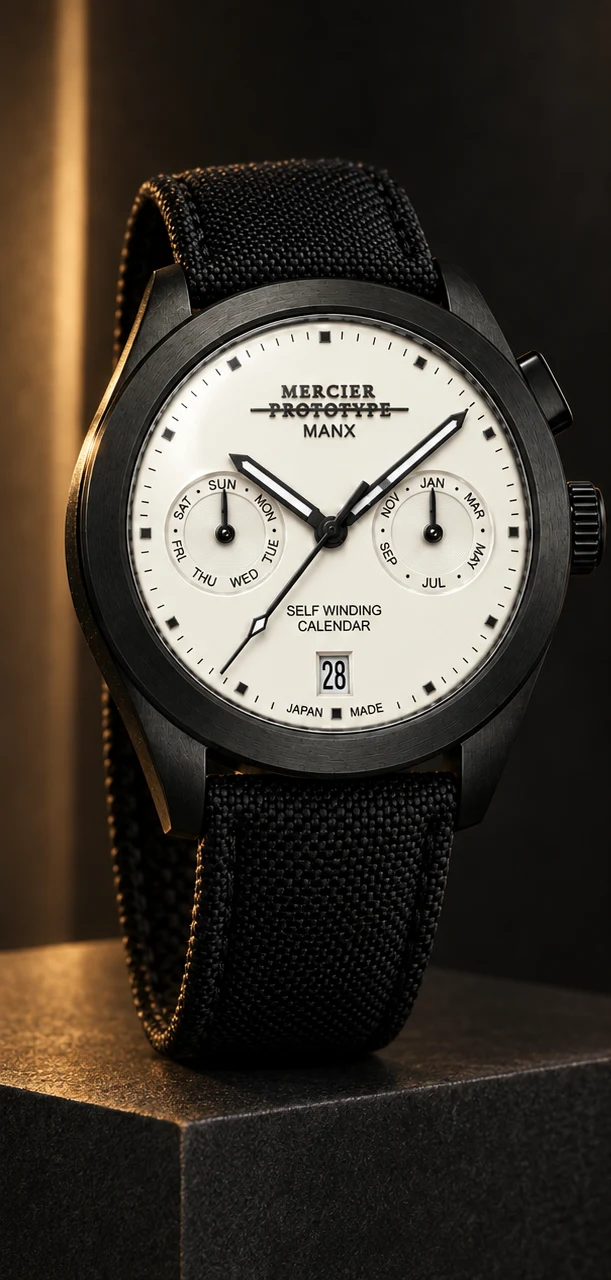
Our Manx line shows this path. The Manx Blanc and Manx Noir share a 42mm case and a Miyota 9122 automatic movement, differing in dial finish. Feedback from owners guides the next version.
Prototype vs. Production Watch: Where the Lines Fall
The difference between a prototype and a production watch is mostly about intent and repeatability. A production watch is built to the same spec every time. A prototype is built to learn something.
Some quick differences to keep in mind:
-
Consistency: Production watches are built to the same spec. Living prototypes may differ slightly as the design evolves.
-
Purpose: Production aims for a stable, repeatable product. Prototypes test ideas.
-
Scale: Large brands produce thousands of identical pieces. Small makers often limit numbers, like our run of 200 Manx watches across all four models.
Buyers can ask the maker what changes between versions and how changes are communicated before they buy.
The Watch Design Process, Step by Step
Watch development is not a straight line. It is often a loop that repeats as a design is refined, and each pass costs time and money, so knowing where you are in it matters.
- Define the goal. Decide the case diameter, lug-to-lug length, dial layout, and target wearer before any drawing happens. A 42mm case with a 48mm lug-to-lug wears very differently from a 42mm case with a 52mm lug-to-lug, even though both are called "42mm."
- Sketch the layout. Draw the dial, hands, indices, and case proportions at full scale. This is where legibility and proportion get settled cheaply, on paper, before tooling exists.
- Choose the movement. Pick an automatic movement whose dimensions, stem height, and hand sizes fit the case you drew. A Miyota 9122, for example, dictates a certain case depth and dial-foot pattern; if the movement does not fit, the case gets redesigned, not the movement.
- Build a mock-up. A non-running or static model proves the layout and proportions in three dimensions. This is the stage most people picture when they hear "prototype," and it is the cheapest place to catch a design that looks wrong on a wrist.
- Build a functional prototype. Assemble a running watch to test the movement, crown action, crystal seating, and water resistance together. This is the first point where fit and function can be judged honestly.
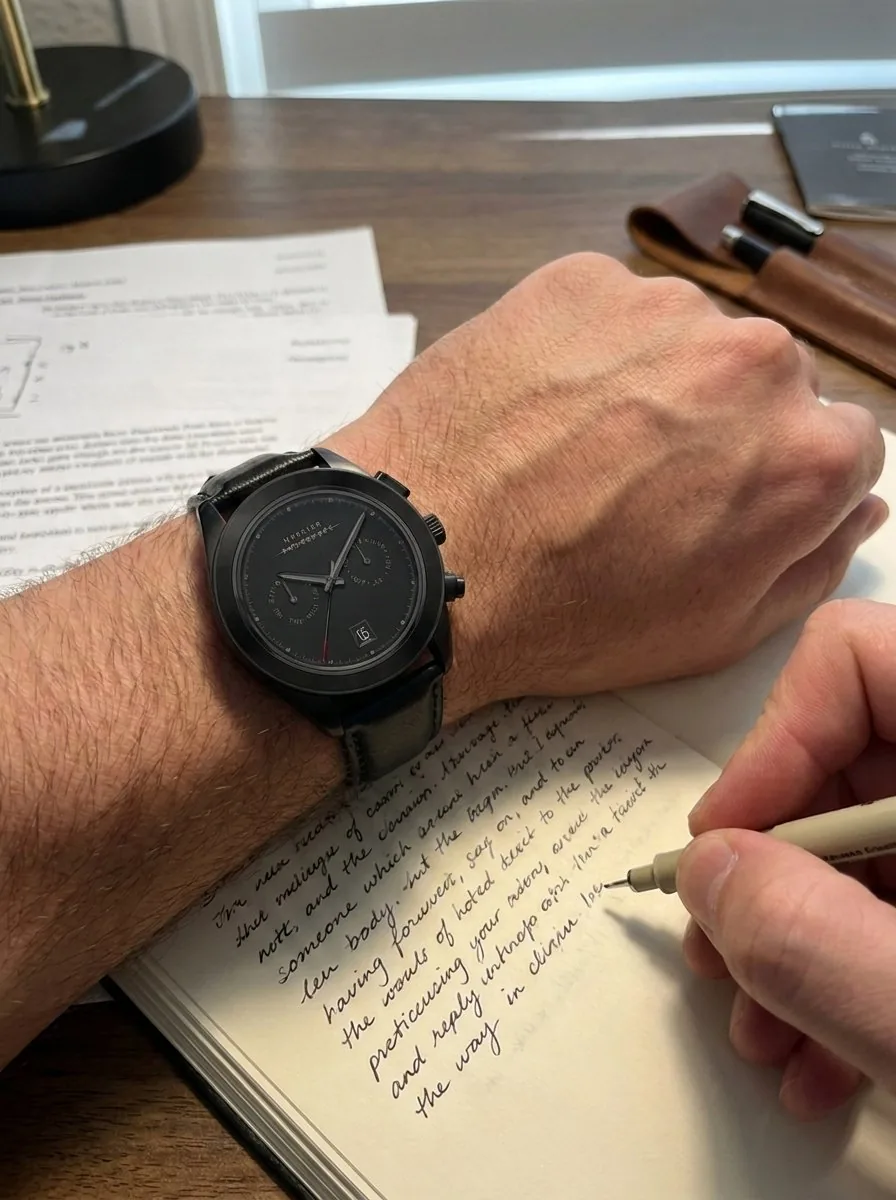
- Wear and test it. Put the watch on a wrist for weeks, not minutes. Check comfort at the lugs, legibility at an angle, crown access, and whether the caseback sits flat. Water resistance is verified here, not assumed.
- Revise and repeat. Adjust the lugs, crown, dial, or strap based on what the wear test revealed, then build the next version and compare it directly to the last. Each revision cycle adds cost and calendar time, which is why most small brands limit themselves to a small number of loops before committing to a run.
Watch out: skipping the mock-up stage to save time usually costs more later, because proportion and legibility problems that are cheap to fix on paper become tooling changes once a case exists.
The design process runs as a loop of steps, and each one has a clear purpose.
| Step | What to do | Key focus |
|---|---|---|
| Define the goal | Decide case diameter, lug-to-lug length, dial layout and target wearer | Lug-to-lug length changes wear |
| Sketch the layout | Draw dial, hands, indices and case at full scale | Legibility and proportion settled on paper |
| Choose the movement | Pick an automatic movement that fits the case | Case gets redesigned, not the movement |
| Build a mock-up | Make a non-running static model | Cheapest place to catch problems |
| Build a functional prototype | Assemble a running watch to test movement and water resistance | First honest test of fit and function |
| Wear and test it | Wear the watch for weeks and check comfort and legibility | Water resistance verified here |
| Revise and repeat | Adjust lugs, crown, dial or strap, then build the next version | Each loop adds cost and time |
How Prototype Watch Testing Works and What to Check Before You Buy
Before buying any watch, it helps to check its function, fit, and durability yourself. Ask the maker what testing they perform before a watch ships.
What the maker should test and document:
-
Rate and drift. A mechanical movement will drift; ask the maker how much and whether they measured it.
-
Water resistance. Ask the maker how the 10 ATM rating was verified and whether each watch is tested.
-
Caseback serial. Check that the caseback carries a serial number that matches your paperwork.
What you can check yourself:
- Confirm the crystal is sapphire, as listed, with an anti-reflective coating.
- Does the caseback show a serial number, and does it match the card or receipt?
- Does the strap fit your wrist? Measure before you order: the Standard strap fits 6.5 to 7.3 inch wrists and the Extra Large fits 7.5 to 9.1 inch wrists.
- Compare the dial, hand set, and case finish against the product photos and listing details.
How to tell a living prototype from a modified production watch or replica:
- Documentation. Ask whether the maker keeps a record of what changed between versions and when your watch was built.
- Consistency with siblings. Ask whether other owners of the same model have identical specs, and whether specs changed between runs.
- Provenance of the movement. Ask which movement is inside and whether the maker or a watchmaker can service it.
- Willingness to answer. A good maker can explain their revision process in plain language.
Watch out: a low price combined with a "prototype" label deserves a closer look before you buy.
A small amount of daily drift is normal for a mechanical watch. If you need quartz-level accuracy, a mechanical watch is not the right choice.
Buying Your Own Living Prototype: Next Steps
If you want a watch built on this idea, start by deciding what you need. A daily wearer and a collector may choose differently.
Here is a simple way to narrow your options:
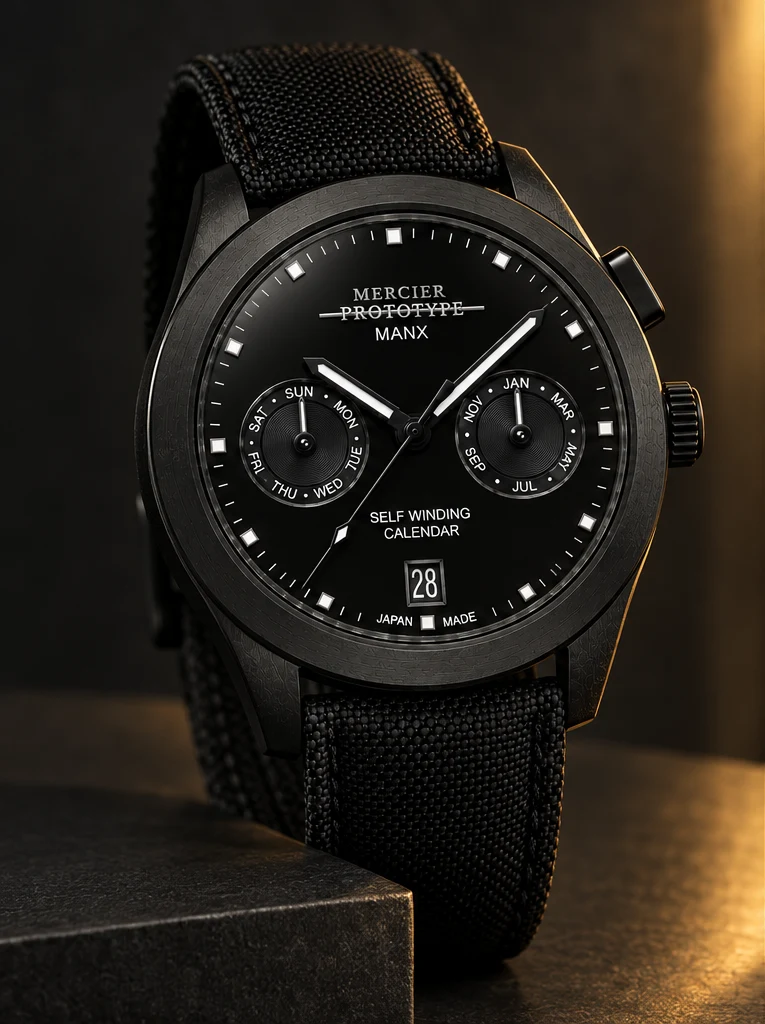
- Pick a style. The Manx Blanc and Manx Noir offer a three-hand look. The Manx Meridian Blanc and Manx Meridian Noir add day, month and 24-hour subdials plus a date.
- Check the fit. Measure your wrist before you order.
- Read the policies. Confirm the 5-year warranty and 30-day return terms before you pay.
- Ask questions. At Mercier Prototype, you can reach the owner directly with questions about any model.
Each Manx watch is priced at $795.00. Parts arrive in December and watches ship late December. Take your time choosing, and ask us anything before you buy.
Frequently Asked Questions
Is a living prototype watch the same as a prototype watch?
Not quite. A prototype watch is any working model built to test design, function, or materials. A living prototype is a watch sold as a finished piece while the maker keeps refining the design across later batches, so the watch you wear is part of an ongoing development cycle rather than a one-off test. Both terms describe development stages, but the living version is intended for real wear from the start.
Are prototype watches made to be worn?
Many are. Working prototypes are often built so the designer can test fit, comfort, water resistance, and how the movement performs on the wrist over days and weeks. Some are kept as archive or development pieces and never sold. When a watch is sold as a living prototype, checking the maker's return policy matters as much as the specifications.
Can a living prototype watch differ from the photos?
Small differences are possible, because the design can change between production runs. Render images are often produced before a physical sample exists, so they may show a design that has since been revised. Ask the maker which batch a watch comes from, check the serial number on the caseback, and confirm the specifications in writing before you buy. At Mercier Prototype, each Manx is individually serial-numbered and listed with its movement and case details.
Are prototype watches collectible?
Some are, mainly when they are numbered, limited, or documented as development pieces. Collectors value provenance and a clear record of what changed between versions. A prototype that is sold as a finished watch and later refined is a different proposition from a true archive prototype, so check whether the seller documents the design history before you treat the watch as a collectible.