How a GMT Watch Works: A Plain Guide
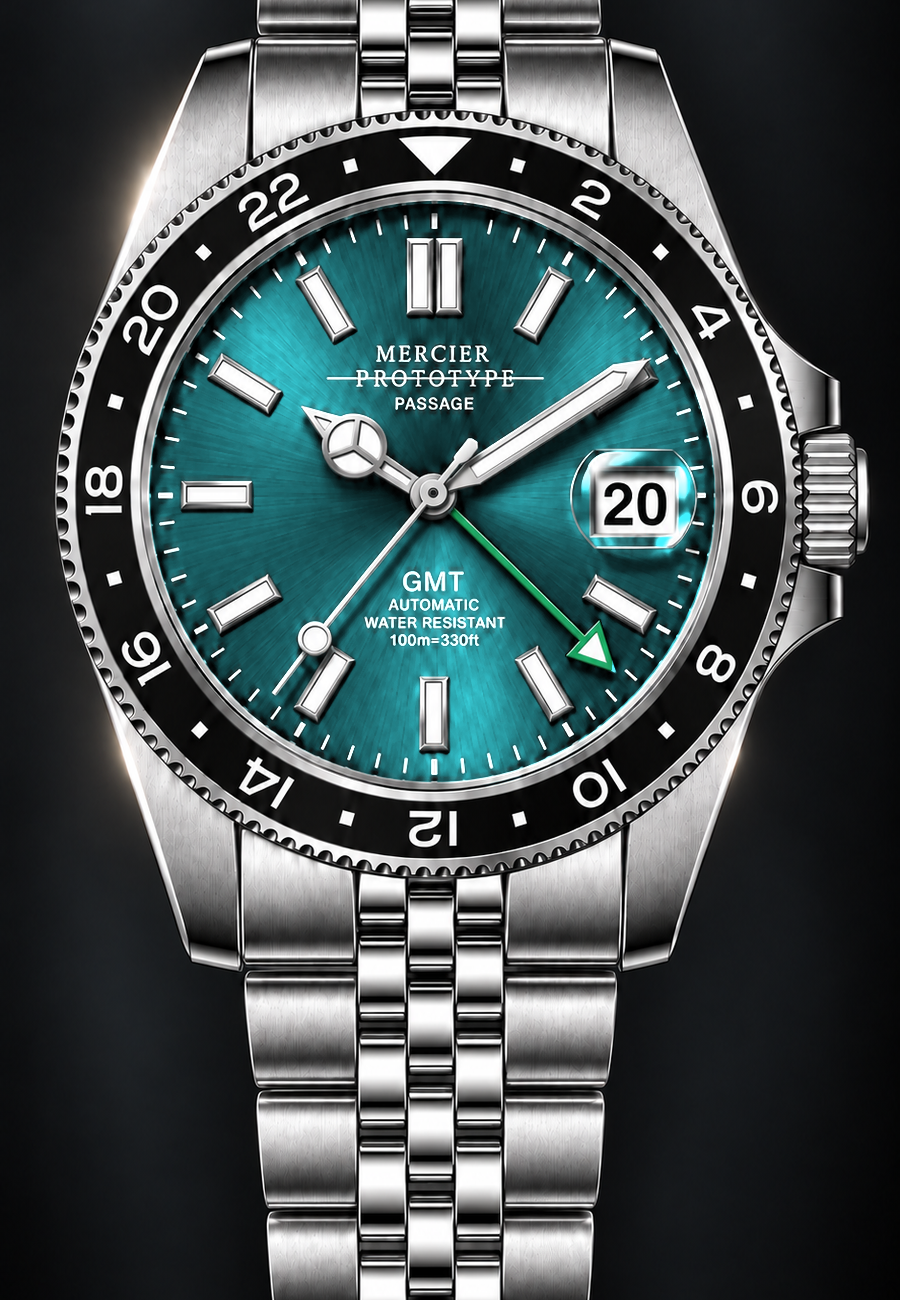
A GMT is one of the few complications that earns its place on the wrist. A moon phase is nice to look at, but it has never helped anyone make a 7 a.m. call to a client six time zones away. A GMT does.
This guide covers how a GMT watch works, the difference between a true GMT and a caller GMT, how to set a second time zone, and when you would want a world timer instead.
What GMT means on a watch
GMT stands for Greenwich Mean Time, the reference point the world's time zones were originally measured from. On a watch it means the dial can show two time zones at once. The format came out of the jet age, when crews crossing oceans needed home time and local time on one wrist without doing math at 30,000 feet.
The fourth hand
A standard watch has hour, minute and seconds hands. A GMT adds a fourth hand that makes one full turn every 24 hours instead of 12. Because it runs at half the speed of the regular hour hand, it always tells you whether it is day or night. At 2 p.m. it points to 14. At 2 a.m. it points to 2.
That hand is read against a 24-hour scale, which sits on the dial, on a rotating bezel, or both. The minute hand is shared by every time zone, since most of the world is offset by whole hours. India and Nepal are the exceptions, and a GMT hand will not show their half-hour and 45-minute offsets, so you do that part in your head.
Here is how you read one:
- The regular hour hand shows local time on the usual 12-hour scale.
- The 24-hour hand shows a second zone, usually home.
- A rotating 24-hour bezel adds a third. Turn it by the time difference and read the 24-hour hand against it.
True GMT vs caller GMT
Both show two time zones. The difference is which hand you can move on its own.
On a true GMT, sometimes called a traveler's GMT, you can jump the local hour hand forward or back in one-hour steps while the minute hand and the 24-hour hand keep running. You land in Lisbon, pull the crown, click the hour hand ahead, and you are done. Home time on the 24-hour hand has not moved. On many true GMTs the date follows the local hour hand, so it stays correct for where you are.
On a caller GMT, sometimes called an office GMT, the 24-hour hand is the one that moves independently. That suits tracking a colleague's time from your desk. When you travel, you have to reset the main time the usual way, which takes longer.
Neither one is wrong. A caller GMT answers "what time is it for them?" A true GMT answers "what time is it where I am?" If you spend a lot of time in airports, the second question matters more.
That is why we built the Passage as a true GMT, with an independently adjustable hour hand and a 24-hour bezel.
How to set a second time zone
Crown positions vary between movements, so check your manual first. On a true GMT the process generally looks like this:
- Set home time. In the time-setting position, set the minute hand and the 24-hour hand to home time. Check the 24-hour hand so you land on the right side of noon.
- Set local time. In the hour-jump position, click the regular hour hand to local time. The minute hand and the 24-hour hand should not move.
- Use the bezel for a third zone. Rotate it by the time difference. Tokyo is 14 hours ahead of Kansas City during daylight saving time, so turn the bezel 14 hours and the number under the 24-hour hand reads Tokyo time.
Some frequent travelers set the 24-hour hand to UTC and use the bezel for home. Pilots do this because flight plans run on UTC.
GMT vs world timer
A world timer shows every major time zone at once. It usually has a ring of city names around the dial and a 24-hour ring that turns with the hour. Find the city, read the hour next to it. If you work with teams in eight cities, it is the right tool.
The tradeoffs are real. The dial is busy and harder to read. The city ring does not account for daylight saving time, so some cities are off by an hour for part of the year. World timers are also more complex, which shows up in case size, servicing and price.
A GMT shows two or three zones, keeps the dial clean, and is quicker to adjust when you change location. If you need to know the time everywhere, get a world timer. If you need the time here and at home, get a GMT. Most people are in the second group.
Why a GMT suits travel
You know home time without math. The 24-hour hand settles a.m. versus p.m., which matters more than anyone admits after a red-eye. The bezel covers a third zone for the client, or the friend who moved somewhere inconvenient. On a true GMT, a time zone change takes a few clicks of the crown.
The Passage
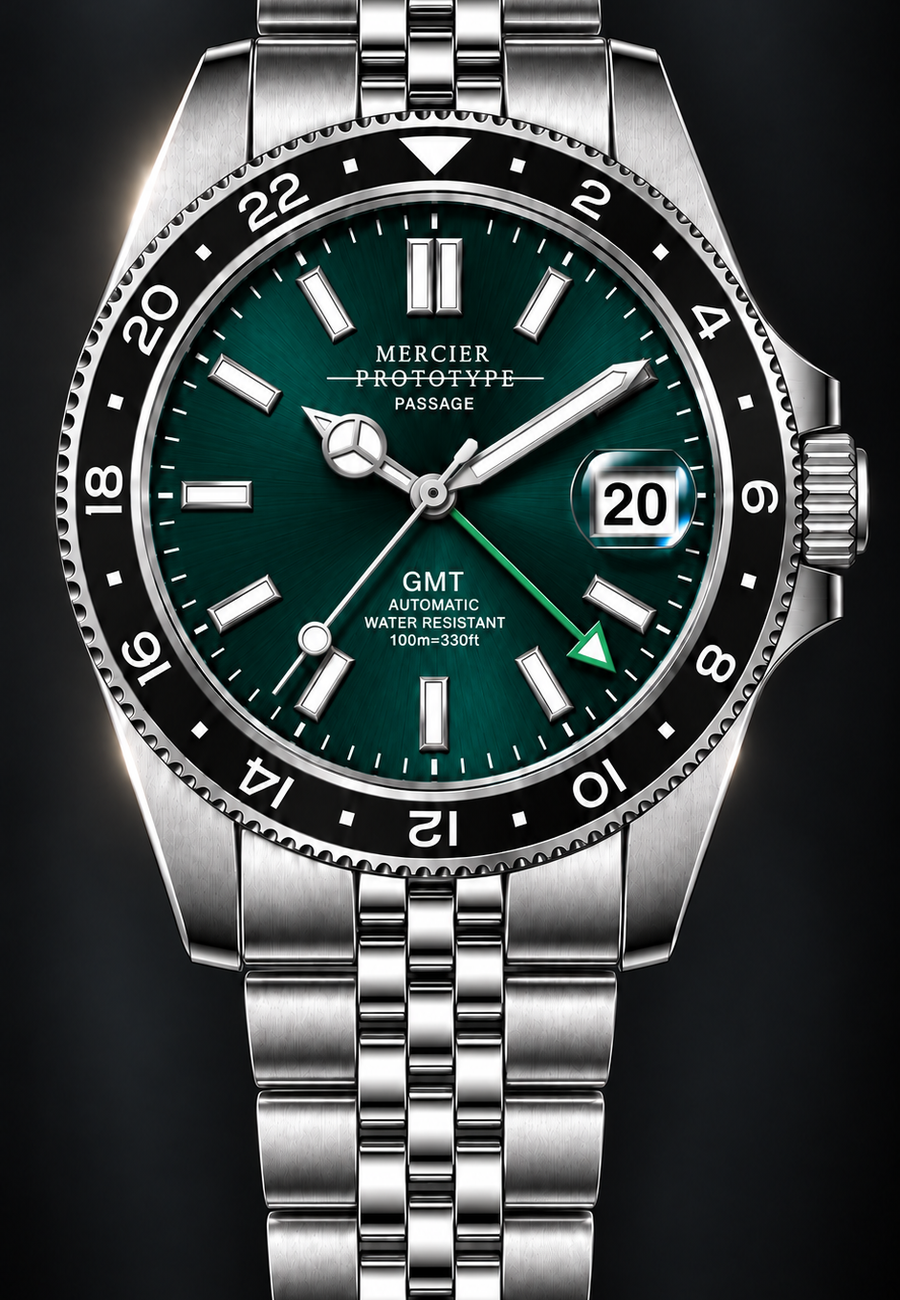
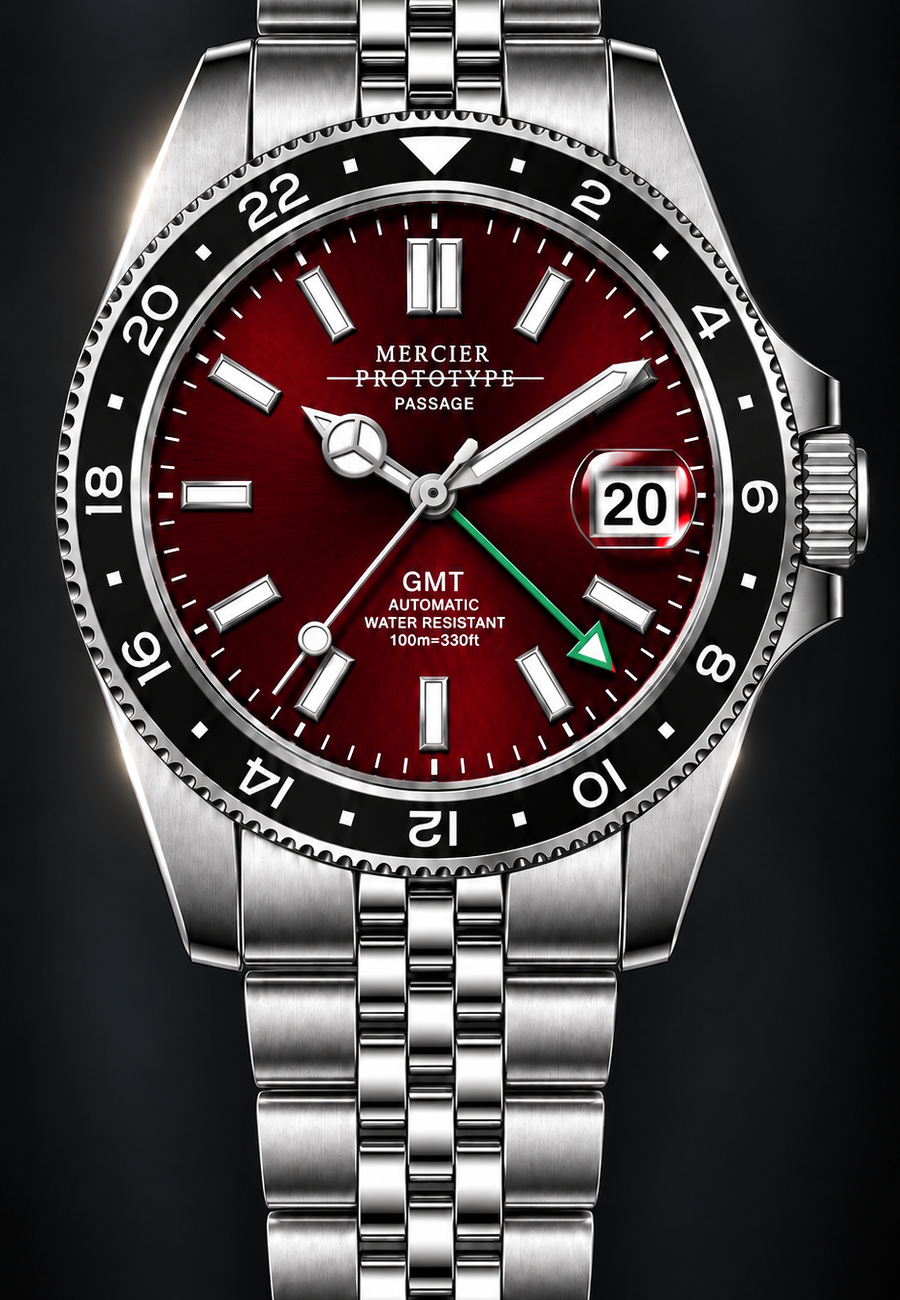
The Passage is our travel watch. It is a true GMT with an independently adjustable hour hand and a 24-hour bezel, and it comes in green, red and aqua. Each one is individually numbered and backed by a 5-year warranty and 30-day returns.
If you want to see how a true GMT looks in green, red or aqua, take a look at the Passage. For more on how watches work, see the Mercier Prototype blog.
FAQ
Can a GMT watch show three time zones?
Yes, if it has a rotating 24-hour bezel. The hour hand shows local time, the 24-hour hand shows a second zone, and the bezel, turned by the offset, shows a third.
Is a true GMT better than a caller GMT?
For travel, yes. A true GMT lets you change local time by jumping the hour hand without disturbing home time. A caller GMT is better for tracking another zone from one place.
Do I need to adjust a GMT watch for daylight saving time?
Yes. The watch does not know when clocks change. On a true GMT, jump the local hour hand by one hour and leave the 24-hour hand alone, unless home time changed too.