Black or White Dial Automatic Watch: Which Fits You?
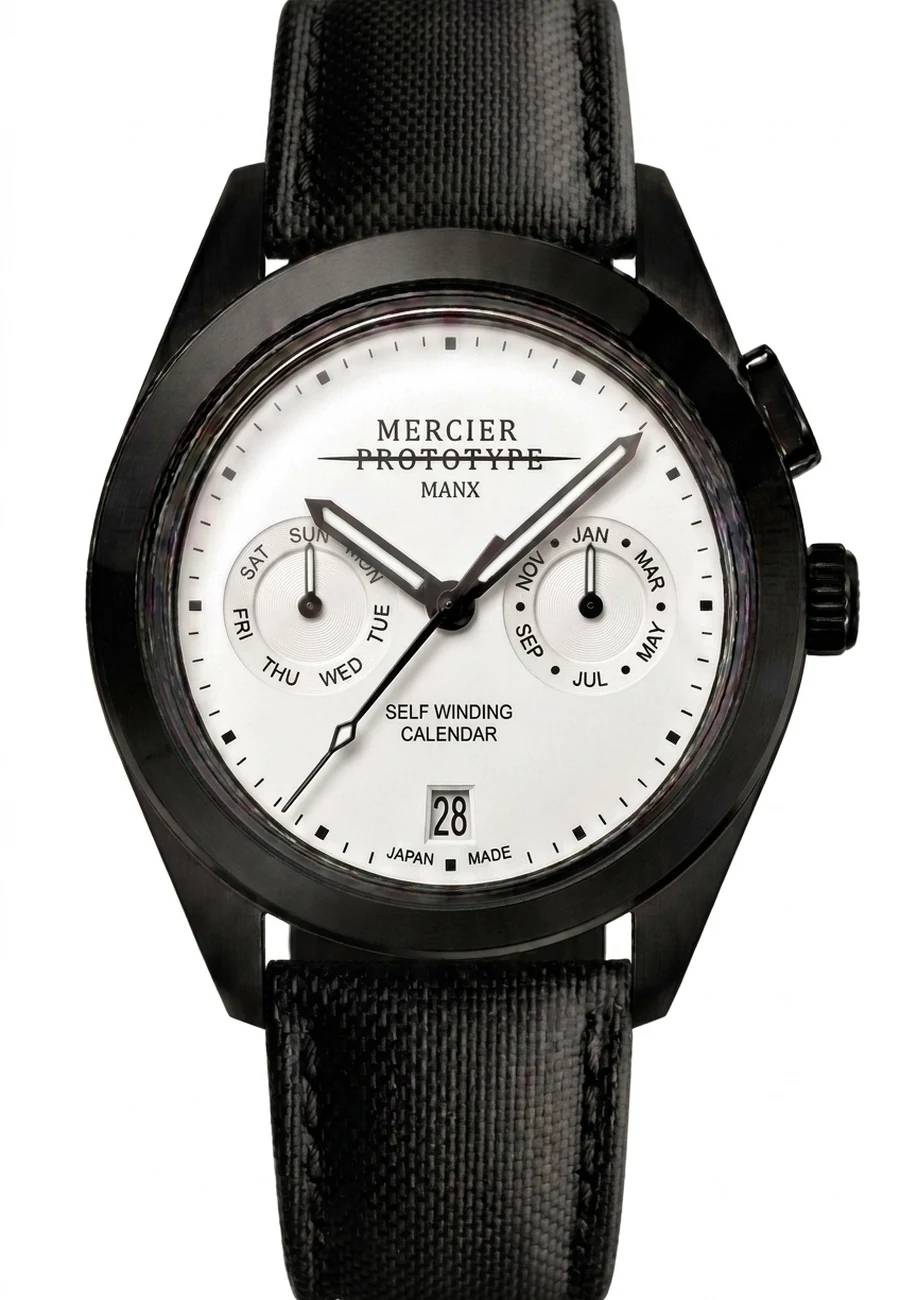
Choosing a black or white dial automatic watch is a design decision, not a movement upgrade. Manx Noir and Manx Blanc use the same Miyota 9122 automatic caliber and 42mm black-PVD case. Start with how clearly you read each dial, then choose the contrast and character you prefer to wear. Compare the current Manx models.
We offer both because a color choice can change the impression of the whole watch. There is no need to invent a different personality for the mechanism underneath. A useful comparison separates what changes visually from what stays the same mechanically.
What stays the same in a black or white dial automatic watch?
Within this particular comparison, the two Manx versions share the 42mm case, Miyota 9122, domed sapphire crystal with anti-reflective coating, 10 ATM water-resistance rating and $795 price. Both are individually numbered and carry a five-year limited warranty. Manx Noir and Manx Blanc list their current specifications separately.
That makes the comparison more useful than matching unrelated watches by dial color. Here, you can concentrate on the visual choice without mistaking a different finish for a different movement or assuming the lighter dial means a smaller case.
Manx Noir: a more continuous dark silhouette
In the Noir photograph below, the dark dial sits within the black case and strap, creating a relatively continuous silhouette. The calendar subdials and applied markers add detail without changing that overall impression. This is our design reading of the photograph, not a claim that a black dial is automatically more formal or more legible.
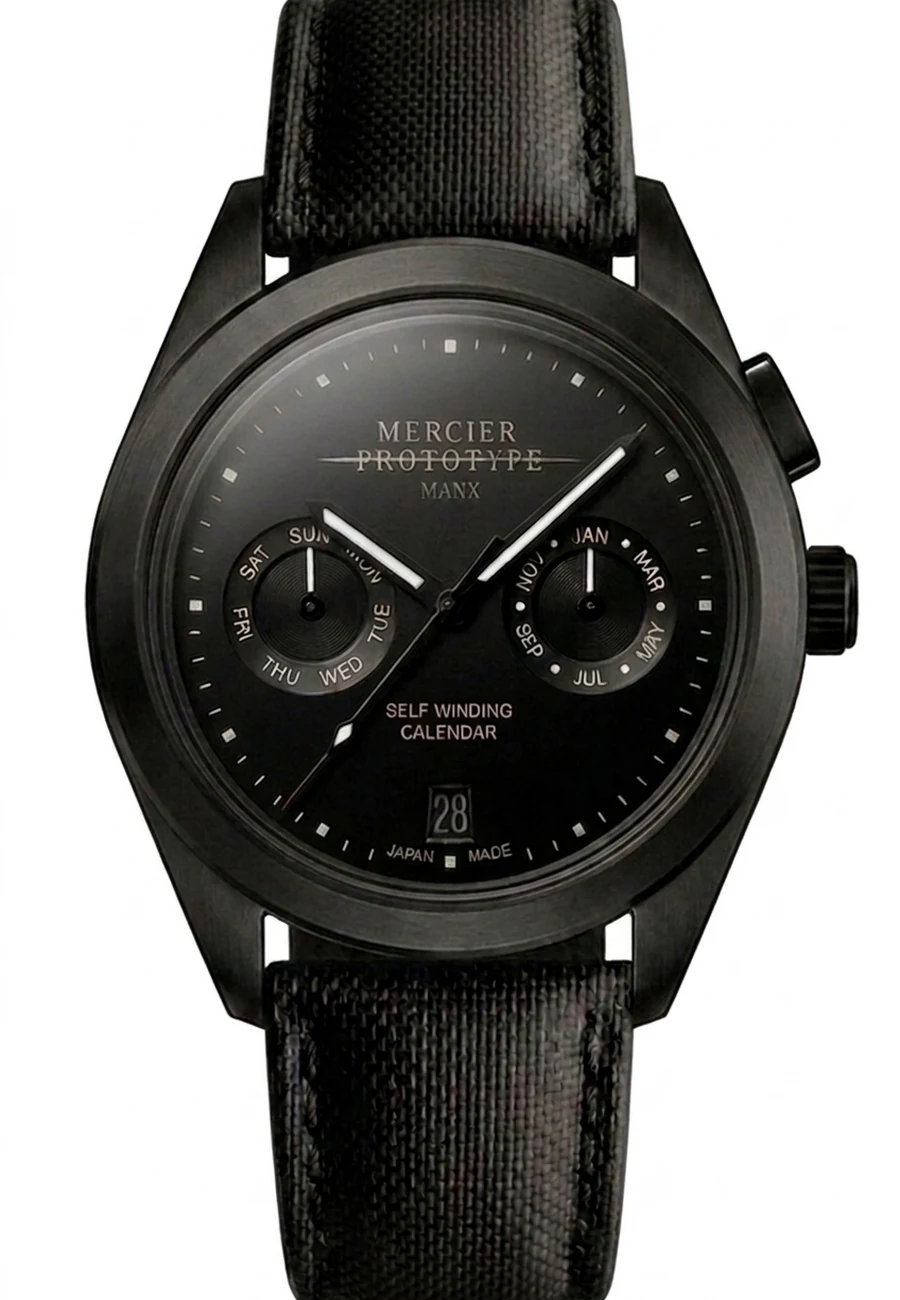
If you tend to prefer a quieter color palette, start here. Then look beyond the full-watch image: the product gallery includes different angles so you can examine the case profile and how light reaches the dial. Judge the complete composition rather than choosing from the word “black” alone.
Manx Blanc: a lighter center inside the dark case
The Blanc photograph at the top of this article gives the face of the watch a brighter visual center. Its white dial is framed by the dark case, while the hands and hour markers provide contrasting details. The Blanc product page is the place to review the current variant and gallery before ordering.
Our view is that this contrast makes the dial a more prominent part of the design. That does not mean white is the universal answer for readability. Hand shape, reflections, lighting and your own vision still matter. Use the photograph as a comparison tool, not as a substitute for checking the watch in the conditions that matter to you.
Compare them at wrist scale
Open both product photographs at roughly the size you expect to see on your wrist. Look for the hour and minute hands first; then read the day, month and date. If you want a guide to those functions, our calendar-display explainer identifies each one.
Next, compare the case measurements with a watch you already wear. Both Manx pages list 42mm diameter and 51mm lug-to-lug, so dial color does not change the physical footprint. Use the specification sheet for fit, and the photographs for visual preference.
Finally, ask which version you would reach for on an ordinary morning. You do not need to match a watch to every piece of clothing you own. For us, an everyday watch should feel like a deliberate choice without needing an occasion to justify wearing it.
Why the Manx
We designed the Manx choice around two expressions of the same calendar watch, not a maze of overlapping specifications. Noir emphasizes the dark silhouette; Blanc brings the dial forward. Our watch collection lets you compare the versions and their current purchase details.
Choose the one you want to keep looking at. The best color decision is the one that still feels right after the novelty of a new watch wears off.
Explore the Manx
Compare Noir and Blanc, read the specifications and find the dial that feels like yours.
Compare the Manx