Automatic vs. Quartz Watches: Which Should You Actually Buy?
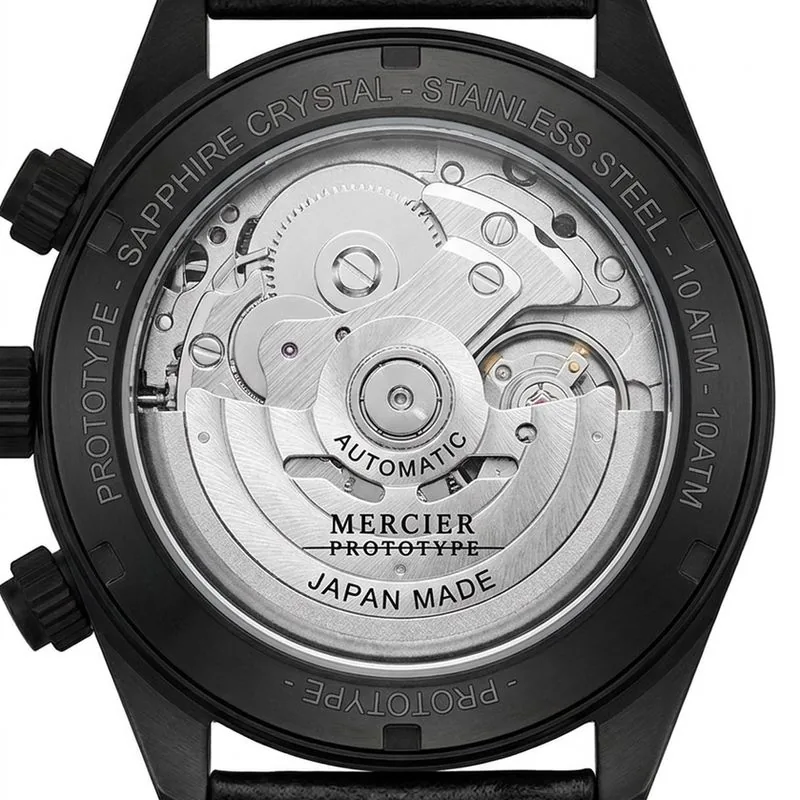
Two watches can tell the same time and be built on completely different ideas of what a watch is. The choice between them is less about which is "better" and more about what you want from the thing on your wrist.
It's the first real fork every buyer hits: automatic or quartz? The marketing around it is loud and not always honest, so here's the plain version. One is a tiny mechanical engine wound by your own movement. The other is a quartz crystal kept in line by a battery. Both keep time. Only one of them is alive on your wrist, and, surprisingly, it's not the more accurate of the two.
How each one actually keeps time
A quartz watch runs on a battery. That battery sends current through a small quartz crystal, which vibrates at a precise, fixed frequency, 32,768 times a second. A circuit counts those vibrations and ticks the seconds hand forward once per second. It is, in the best sense, a solved problem: cheap to make, brutally accurate, and nearly maintenance-free.
An automatic watch has no battery and no circuit. It's a mechanical movement, dozens of tiny parts, powered by a coiled spring called the mainspring. A weighted rotor swings as your wrist moves through the day and winds that spring for you. The spring's energy is released in tiny, regular beats through an escapement, several times every second. That's why an automatic keeps running on motion alone, and why it has a soul that a battery can't fake.
"Quartz solves the problem of telling time. A mechanical watch insists on being more than a solution."
The difference you can feel
Hold the two side by side for ten seconds and watch the seconds hand. The quartz ticks, one discrete jump per second. The automatic sweeps, a smooth, gliding motion, because the movement beats so many times a second that your eye reads it as continuous.
That sweep is the single most recognizable sign of a mechanical watch, and for a lot of people it's the entire reason they cross over. You also feel the rotor: pick up an automatic that's been sitting and give it a gentle turn, and you can sense the weight inside settling into motion. A quartz watch gives you none of that. It just works, silently, which is exactly its appeal to a different kind of owner.
Accuracy: the part most people get backwards
Here's the truth that trips up first-time buyers. Quartz is dramatically more accurate than any affordable automatic, and most expensive ones too. A standard quartz watch drifts by around 15 seconds a month. A good entry-level Japanese automatic drifts by a few seconds to roughly half a minute a day.
So if pinpoint accuracy is your only goal, the decision is over: buy quartz. People choose automatics knowing they're trading a little precision for craftsmanship, longevity, and the experience of wearing a small machine. That trade is the whole point, not a flaw to apologize for.
What they really cost to own
Upfront price is only half the story. The longer cost lives in maintenance:
- Quartz: a battery every two to three years, swapped for a few dollars. Beyond that, almost nothing. Low cost, low involvement, low drama.
- Automatic: no battery ever, but the movement benefits from a service every several years to keep the lubricants fresh and the timing tight, more like maintaining an engine than changing a battery.
There's also a value question. A reliable quartz watch is a tool that quietly does its job and is eventually replaced. A well-made automatic is built to be serviced and kept, the kind of thing that gets handed down rather than thrown out. If you want a watch you'll still be wearing in a decade, that distinction matters more than the sticker price.
Quartz vs. automatic, at a glance
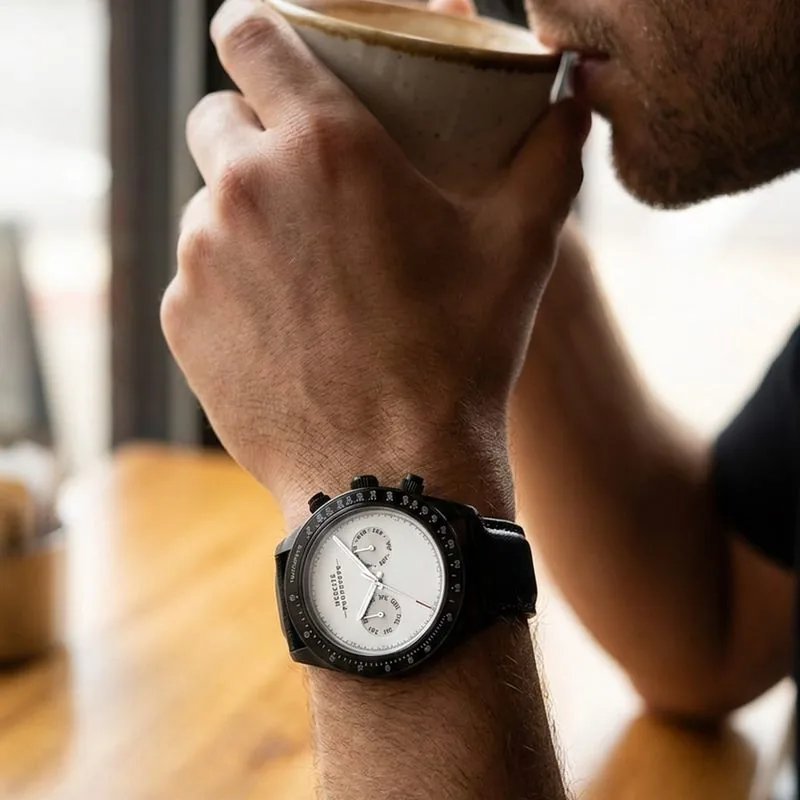
So which should you buy?
Strip away the snobbery and it comes down to what you actually want:
Buy quartz if…
You want a watch you can set once and ignore, accurate to the second, light on maintenance, unbothered by a few weeks in a drawer. For a pure grab-and-go tool, quartz is the rational pick, and there's nothing unsophisticated about choosing it.
Buy automatic if…
You want the watch to be part of the appeal, not just a clock. You like the sweep, the weight, the idea that your own motion keeps it alive, and the fact that it's built to be serviced and kept rather than tossed. For a first real watch, one you'll remember buying, an entry-level automatic from a proven Japanese movement maker like Miyota or Seiko gives you genuine mechanical character without a luxury price.
That last part is exactly the gap we built Manx to fill.
Manx, an automatic worth keeping.
A Japan-made automatic movement, domed sapphire crystal, 10 ATM, and that unmistakable sweep, individually numbered and built to be worn every day. No heritage premium, just the watch and the math behind it.
See the collection →